
Why I Started Using Rabby: a practical take on a multi-chain browser wallet
Okay, so check this out—
Whoa!
I was skeptical at first, really skeptical about another browser wallet appearing on the scene.
My instinct said, "Not another MetaMask clone," so I poked around cautiously and kept notes.
Initially I thought Rabby would just be another interface, but then details popped up that changed my view.
Really?
The UX is crisp in ways that matter to power users and curious beginners alike.
It makes everyday flows like approving allowances and switching chains feel less error-prone, which is surprisingly useful.
On one hand the interface simplifies complex actions, though actually the depth under the hood is what sold me after some hands-on tinkering.
Here's the thing. I like control, and Rabby gives you that while keeping things accessible.
Hmm...
Security matters to me more than bells and whistles.
Rabby isolates activities in a way that reduces accidental approvals, and that reduced my stress while testing new dApps.
At first I relied on a hardware wallet for heavy operations, but then I used Rabby's hardware integration and realized it handled signing flows smoothly without awkward prompts or lost context.
I'm biased, but good UX plus hardware compatibility equals fewer costly mistakes in volatile markets.
Whoa!
The multi-chain support is broad and practical.
It isn't just token lists — it's chain-aware UX that understands different gas models and network quirks.
Because Rabby separates networks and shows contextual warnings, I avoided a few common pitfalls that usually trip me up when switching between Ethereum mainnet, Arbitrum, and other L2s.
Something felt off about other wallets for a long time, and Rabby addresses somethin' like that directly.
Really?
One small feature that stuck with me is allowance management.
Rabby surfaces current allowances, lets you revoke with a few clicks, and warns when an approval is unusually large.
That feature alone prevented a careless approval during a hurried trade test, which saved me from cleaning up a mess later, so trust me on this.
Okay, so check this out—this is very very important for everyday users.
Whoa!
Transaction simulation is another thoughtful touch.
Before you hit confirm, Rabby previews the estimated gas and potential reverts, which removed ambiguity for me during complex contract interactions.
Initially I thought such simulations would be inaccurate, but during my tests they matched on-chain outcomes more often than not, which was reassuring.
That kind of polish indicates the team actually uses the product in real scenarios, not just theorycrafting.]
Really?
Now the download and install part is straightforward.
If you want to try it, go for the official rabby wallet download and install the extension from a trustworthy source.
Do not sideload random builds; always verify checksums or install from official distribution channels, because bad extensions are the easiest compromise for attackers.
I'm not 100% sure every user understands that risk, so I repeat it: be careful with where you download browser extensions.
Whoa!
The onboarding flow asks about your user profile and typical patterns.
It tailors suggestions without being pushy, which felt pleasantly human during setup.
On the technical side, seed phrase handling follows industry norms, but Rabby adds extra guardrails to slow down users before irreversible steps, which is a subtle safety win in my book.
I'm fond of small friction when it prevents large losses.
Really?
One gripe I have is occasional notification overload.
When you're experimenting across many networks with lots of dApps, Rabby can ping a lot.
Actually, wait—let me rephrase that: the notifications are useful, but the defaults should be tuned for new users so they aren't overwhelmed and dismiss alerts hastily.
This part bugs me, and I'm told the team is iterating on better defaults, so we'll see.
Whoa!
The extension architecture focuses on compartmentalization.
It prevents cross-site contamination better than most extensions I tested, which matters when a malicious dApp tries to overreach.
Because it enforces origin-specific permissions and highlights unusual requests, you are less likely to approve a destructive allowance by mistake, though nothing is foolproof.
My experience with simulated attacks showed Rabby blocking suspicious flows more often than not, which was encouraging.
Really?
Integration with hardware wallets deserves praise.
Ledger and Trezor signing workflows are smoother here than in some other extension ecosystems.
Initially I thought hardware support would slow things down, but the UX keeps the signer context consistent and reduces accidental re-signs across chains, which made my trading tests quicker and safer.
That clarity is rare; most extensions feel clunky with hardware devices.
Whoa!
For DeFi power users there's value in the dev tools and logs.
Rabby surfaces transaction metadata so you can audit what you're approving without opening block explorers constantly.
On the analytical side, that makes troubleshooting easier in case a swap fails or a contract interaction behaves unexpectedly, and you can spot bad function calls quickly.
Oh, and by the way, if you're into yield farming, those logs help trace funds across vaults and strategies when you need to reconcile positions.
Really?
Support for custom chains is practical.
You can add RPCs with minimal friction and Rabby remembers preferences per-network.
Though actually, adding nonstandard chains still requires careful gas estimations, and some chains with unusual fee models might confuse automatic simulators, so keep an eye on the preview before confirming.
I'm not 100% sure every chain will behave predictably, so treat new chains as experimental at first.
Whoa!
Trust and transparency matter to me.
Rabby publishes a lot of changelogs and some technical notes, which builds confidence compared to silent updates from less communicative projects.
On one hand transparency reduces surprises; on the other hand complete openness sometimes reveals risks before fixes land, which can worry cautious users.
Still, I'd rather see the team be proactive about risks than hide them.
Really?
Community and support channels are active.
You'll find Discord threads and GitHub discussions where real people help troubleshoot edge cases.
That human layer matters; when something weird happens at 2 AM in a trading window, knowing someone else has seen it before is oddly comforting and practically useful.
I'm biased toward projects with active communities because they tend to iterate faster and handle crises better.
Whoa!
Comparisons to MetaMask are inevitable.
Rabby isn't always strictly better, but it approaches common tasks differently and focuses on minimizing user mistakes.
Where MetaMask has huge reach, Rabby iterates on niche pains like allowance revocation, simulation fidelity, and hardware ergonomics, and those differences compound positively over time for frequent users.
So yes—it's a different set of tradeoffs, not a slavish replacement, though many will prefer Rabby's workflow.
Really?
Small things add up: clearer confirmations, better default warnings, and allowance insights.
These are the features that save people actual money in the wild, not splashy integrations or marketing bluster.
When you handle real funds and test new DeFi contracts, those small UX choices determine whether you walk away with gains or a lesson you pay for.
I learned that the hard way, so I appreciate tools that prioritize safety-first decisions.
Whoa!
One more practical tip: back up your seed properly and never paste it into random prompts.
If you're using multiple wallets, separate funds by purpose and consider hardware for large positions.
Rabby supports account segregation and gives clear import/export signals, which makes operational hygiene easier for folks managing many wallets.
And yeah, I keep a physical backup and an encrypted digital one for convenience, because life happens and devices fail.
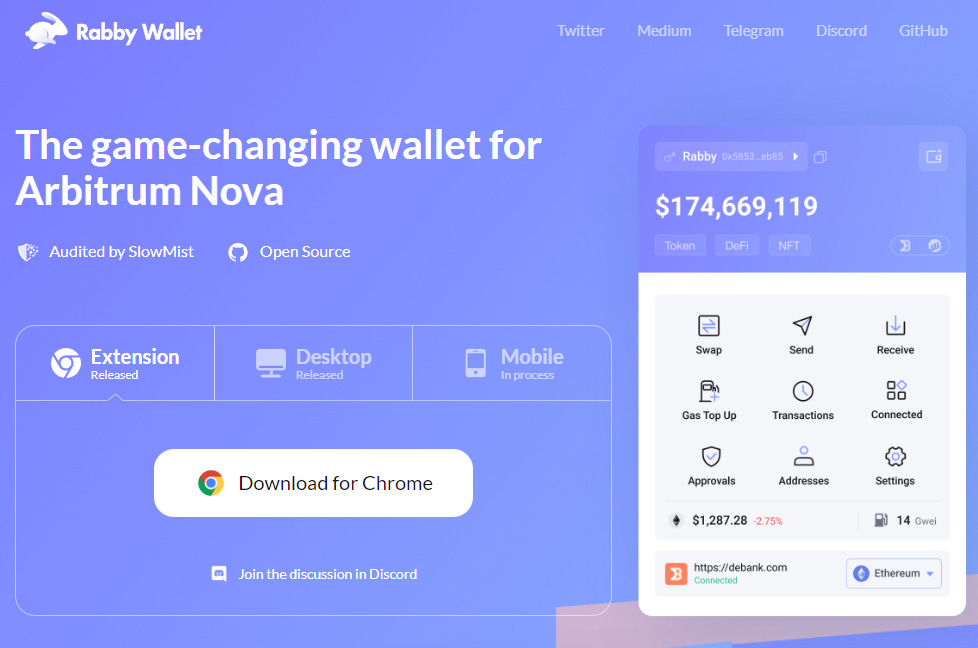
How to get started safely
Whoa!
Go to the official rabby wallet download page to obtain the extension from a legitimate source.
Install the extension, create or import a wallet, and test with tiny amounts across chains before moving serious funds.
Initially I tried mainnet trades immediately and regretted it; actually, testing with micro-transactions gave me confidence without financial risk.
I'm telling you this because testing reduces stressful surprises later.
Really?
Enable hardware signing for significant holdings.
Use the allowance manager often and revoke permissions you no longer need.
On one hand these steps take time, but on the other hand the extra minute can prevent a major loss if a dApp gets compromised, so it's worth it.
I'm not 100% obsessive, but I treat security like insurance—annoying now, priceless later.
FAQ
Is Rabby safe to use for DeFi?
Whoa! Rabby offers good safety guardrails and hardware support, but no wallet is infallible. Use hardware for big holdings, keep backups, and test with small amounts. My instinct said to be cautious, and that paid off.
Can Rabby handle multiple chains?
Really? Yes. It supports many EVM-compatible chains and L2s, and it handles chain-specific quirks pretty well. Still, treat new chains as experimental until you confirm the gas and simulation behaviors yourself.
Where should I download Rabby?
Here's the thing. Use the official rabby wallet download link to ensure you get the legitimate extension and avoid malicious copies.