
Why a Multi-Chain Browser Wallet Matters Now (and How Rabby Fits In)
Whoa! This space moves fast. Okay, so check this out—browser wallets used to be simple key vaults. Now they're gateways to dozens of chains, dozens of tokens, and a tangle of permissions that can make your head spin. My instinct said multi-chain was a convenience play at first, but actually it’s become a security and UX problem that demands better tools.
At a glance, a multi-chain wallet sounds like freedom. Seriously? It does. You can hop from Ethereum to BNB to Polygon without juggling five different extensions or switching seed phrases. But freedom without guardrails feels risky, and that's the tension every DeFi user faces when they install yet another wallet extension.
Here's the thing. User flows matter as much as cryptography. Initially I thought "more chains = more opportunity", but then realized the real headache: permission sprawl and dApp prompts that are confusing even for seasoned users. On one hand, developers want seamless cross-chain interactions; on the other hand, users need clear, simple decisions. It's messy. And somethin' about seeing twenty approval pop-ups in a row just bugs me.
Where multi-chain wallets usually fail — and what to look for
Shortcuts are tempting. Bad defaults are not. Most wallets fail on three things: permission management, chain isolation, and UX clarity. Permission fatigue leads to blind approvals, and blind approvals lead to drained wallets. There, bluntly, is the problem.
Permission management needs to be granular. A good wallet should let you sign a single message or approve a single token spend for a given contract, not hand over a lifetime key to everything. And if you've ever scrolled through a long allowance list wondering "which app is that?"—well, you know the pain. (oh, and by the way... approvals are where most compromised funds started.)
Chain isolation helps contain fallout. If one chain or contract gets exploited, your other assets shouldn't be casually exposed. A tightly designed wallet can sandbox connections so that a malicious dApp on one chain can't snoop your balances on another. I'm biased, but that isolation is non-negotiable for anyone with more than pocket-change on chain.
Rabby at a glance — practical strengths
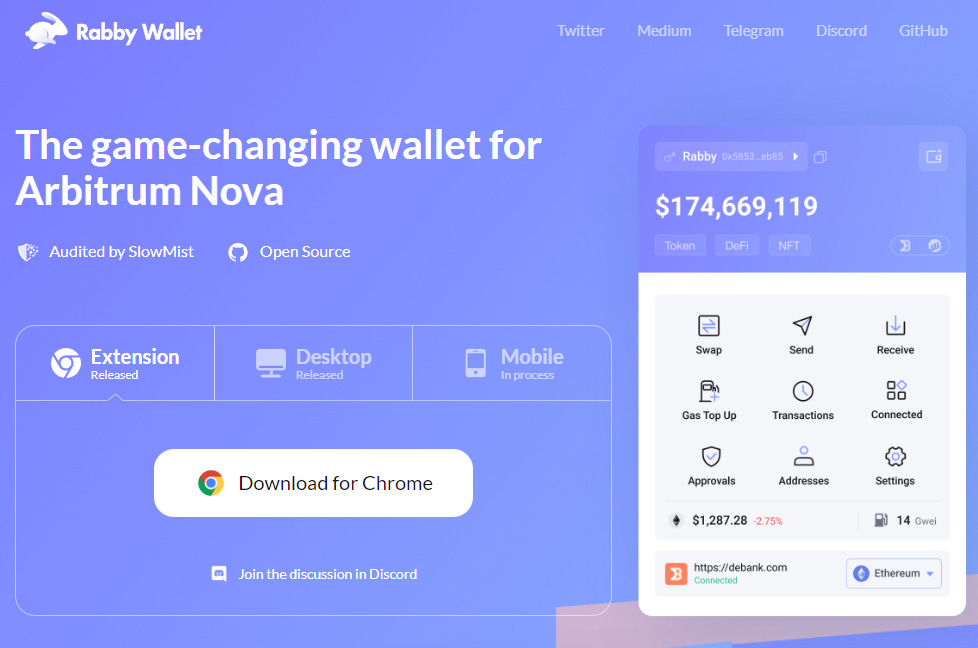
Rabby is built with multi-chain life in mind, and for many users it hits the right balance between convenience and control. It surfaces approvals clearly, groups permissions, and tries to reduce noisy prompts. That matters. Honestly, seeing approvals grouped instead of scattered felt like a relief—small UX things add up.
If you want to try it, here's a straightforward place to get it: rabby wallet download. I mention that link because installs matter; a compromised download channel nullifies any wallet design wins. So pick your source carefully and verify what you install.
Functionality-wise, Rabby supports multiple EVM-based chains, account management that separates dApp identities, and a clearer flow for token approvals. But let me be honest—no wallet is perfect. Some advanced features are still evolving, and the extension model itself imposes limits. I'm not 100% sure Rabby will be everyone's end-state wallet, though for many it will be a huge step up from older options.
Practical tips for safer multi-chain use
Use discrete accounts. Short sentence. Create separate accounts for everyday use and for long-term holdings. Approve only what you need. Revoke allowances you no longer use. Set transaction gas and slippage limits consciously rather than trusting defaults.
Also—watch for patterns. When a dApp asks for blanket approvals, pause. Think: do they actually need that? On one hand, convenience speeds trades; though actually, you can trade just fine with per-transaction approvals if the UI nudges you to do it. Initially that felt slower, but over time it became steadier and safer.
Consider hardware wallets for big bags. They add friction, sure. But when you’re protecting a non-trivial amount, that friction is insurance you can afford. I'm biased toward hardware + extension combos for long-term holdings—call it old-school caution.
Common questions people ask
Is a multi-chain wallet inherently less secure?
Not inherently. Security depends on how the wallet isolates networks, manages private keys, and surfaces permissions. A thoughtful multi-chain wallet reduces risk by making approvals explicit and by helping users compartmentalize accounts. Still, the browser extension model carries systemic risks, so pair it with best practices.
Will using one extension for many chains make me a target?
Possibly. Concentration can be risky. But the alternative—installing many extensions—creates its own attack surface and UX confusion. The smarter play is using one well-designed extension and practicing strict permission hygiene. Again, nobody gets a free pass; it's about trade-offs.
How do I vet a download like Rabby?
Check official sources, verify extension signatures where possible, and use community channels to confirm authenticity. If a download is mirrored widely, prefer the project's canonical link. And keep your browser and extensions updated. Small steps lower large risks.
Okay—here's the wrap, but not a formal finish. I'm curious: did this change how you think about permissions? Initially you might skim and accept defaults, though after walking through actual flows you realize that a little attention buys a lot of safety. There are still open questions—how will wallet UX evolve as chains multiply? Will smart account abstractions fix this mess? I'm not fully sure, but I like the direction tools are moving.
One more thing. If you care about doing DeFi without sweating every minute, prioritize wallets that make approvals visible, auditable, and revocable. That guidance is simple, and yet many people ignore it until they regret it. Seriously—start small, tidy your allowances, and treat your extension like a bank teller that needs clear instructions. Somethin' as small as a monthly allowance audit can prevent a disaster.